Arab Agendas

Could the west’s recent embrace of the Arab Spring become a suffocating bear hug? –  Omar Kholeif, Art Monthly

Order the new issue of Art Monthly online here.

//

Subversion, curated by Omar Kholeif

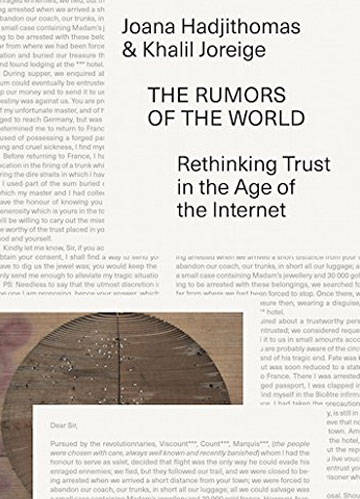
Marwa Arsanios · Sherif El-Azma · Wafaa Bilal · Joana Hadjithomas and Khalil Joreige · Khaled Hafez · Emily Jacir · Larissa Sansour · Tarzan and Arab · Sharif Waked · Akram Zaatari

Cornerhouse is delighted to announce Subversion, a unique group show of new and recent contemporary  art which explores and rethinks modern Arab identity.

Twelve emerging and established artists use autobiographical narratives amalgamated with fiction, popular culture and subversive parody, to express the dichotomies they face as they perform multiple roles in a society which is frequently represented to the outside world in a contorted and mediated manner.
Spanning an array of techniques including installation, video, photography and sculpture, the artists collectively illustrate fragments of the distorted imagination that often preoccupies the Arab world, uncovering the contrasts of existence in a disputed political region. But instead of conforming, they approach the various masks they are expected to wear with a sense of humour whilst referencing to the duplicitous performances of their everyday life.

Emerging Gaza artists and filmmakers Tarzan and Arab will present their award- winning Gazawood project (2010), including short film Colourful Journey and a series of striking cinema poster pastiches of imaginary movies from different genres (illustrated above left). Originating from a region that has not had a functioning cinema since the 1980s and heavily relies on satellite TV and illegal DVD copies, the works on display strongly reflect the twins’ interest in and passion for film.

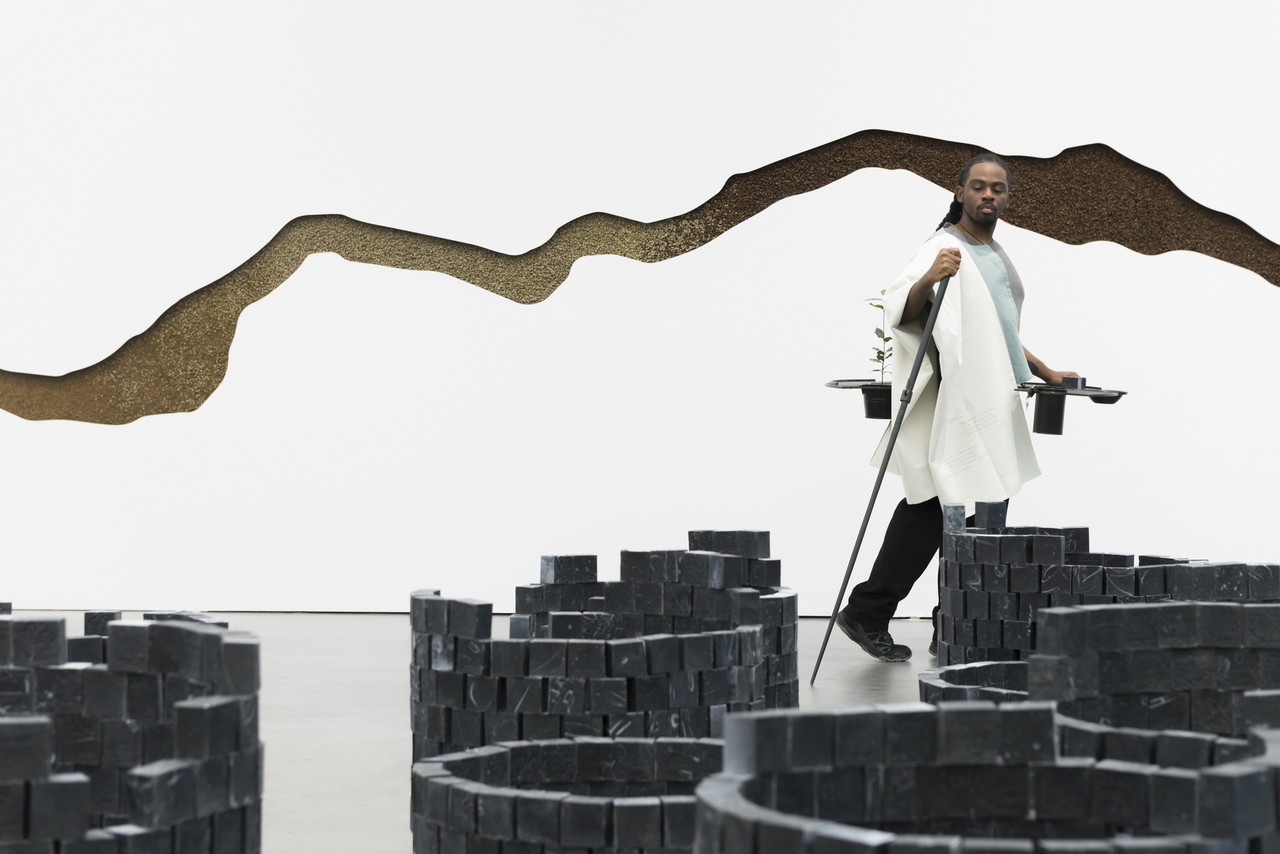
In A Space Exodus (2009), Palestinian artist Larissa Sansour adapts a segment of Stanley Kubrick’s 2001: A Space Odyssey, providing it with new, Middle Eastern context. The film follows the artist on a surreal journey through the universe echoing Kubrick’s thematic concerns for human evolution, progress and technology. In her film, however, Sansour posits the idea of a first Palestinian in space, and, referencing Armstrong’s moon landing, interprets this theoretical gesture as ‘a small step for a Palestinian, a giant leap for mankind’. Originally developed as part of the A Space Exodus installation, Subversion will also feature Sansour’s Palestinauts (2010) (illustrated above right).

Akram Zaatari’s How I Love You (2001) is a study of sexuality among  men in Lebanon. A couple and three individuals talk about their sex lives, about commitments and failures, their passions and love in society.  Using light to produce a white veil that obstructs the viewer, the speakers are unidentifiable. Unlike the conventional veil masking subjects on news channels and documentaries, Zaatari’s glistening light makes these subjects seem like mystical, untouchable creatures, subverting conventional documentary techniques.

Subversion is accompanied by a 2-part symposium on the 13th and 14th April 2012.

A film season accompanying the exhibition will be announced shortly.

//

Judith Barry:…Cairo stories

Judith Barry interviewed by Omar Kholeif

Pioneering video artist Judith Barry has spent the past decade working on the …Cairo stories project, in which Cairene women recount tales of their lives and experiences. Here, Barry discusses the changing perception of Americans in Egypt, the problems of representation and the difficulty of filming in the midst of a revolution.

‘During breaks in shooting we were glued to Al Jazeera on the computer – at the time not on TV channels in New York. You can imagine the mood on the set: elation mixed with excitement, and also at times a great deal of fear. We wrapped two days after President Mubarak stepped down.’

Read the whole interview in the new issue of Art Monthly

//

Screening Egypt

To dream of Egypt [...] is not very different from the appreciation of the sublime: it is a response to distances, abysses, dangers, and self-annihilation. It is a kind of ecstasy. (Kuberski ,1989: 91)

Read the thesis on contemporary Egyptian cinema, penned in 2008 and re-published in 2011 by Scope, here.

//

Egypt’s Revolutions on Film

As Egypt forges itself anew, Omar Kholeif looks back at representations of nationalist revolution in its cinematic history
As jubilation gives way to anxiety and the arduous processes of political renewal that follow a people’s revolution, it feels apt to consider some of the landmark representations of public insurgency in the history of Egyptian cinema.

Prior to the uprising that culminated with the removal of President Mubarak on 25 January 2011, Egypt had been subject to two major revolutions, in 1919 and 1952. The first of these was concerned with ending the British occupation; the second involved the overthrow of the country’s monarchy by a radical Arab-nationalist leadership, leading to such geo-political watersheds as the Suez Canal Crisis and the Six Day War with Israel. Unsurprisingly, these struggles have captured the imagination of Egyptian filmmakers, from Kamal Selim with the pioneering 1939 protest drama Al-Azima (The Will) to Khaled El Hagar with Ahlam Saghira (Little Dreams, 1993), a child’s-eye depiction of nationalist disillusionment during the Six Day War.

The Arab world’s economic, cultural and political behemoth, Egypt is renowned for its popular cinema. Once dubbed the ‘Hollywood of the Nile’, its film industry has proved a force for collective pride and unity nationally and regionally. Its films have served as both spectacle and subversive exposés of daily life in the Arabic world – from the sumptuous, camp melodramas of Youssef Chahine to the lowbrow, seemingly unassuming slapstick comedies of Ismail Yassin (directed by ex-army officer Fatin Abdel Wahab).

Continue reading here

//

The New Guard of Arab Film

As the Arab world reimagines its boundaries, it seems a good moment to reflect on how the medium of cinema has been reshaped by a new generation of film-makers. The last few years have seen a new guard carve out a niche for themselves, breaking on to the international film festival circuit with their divergent portraits of Arabic daily life.
  1. Liverpool Arabic film festival
  2. FACT
  1. Until 10 July
  2. 0151 707 4450
  3. Venue details

Read the article online here

//

Performing the Self

Omar Kholeif on the blurring of fact and fiction in the age of YouTube
While the idea of a constructed self was played out by artists amid the identity politics of the 1980s, the rise of social networks and online video has allowed a new generation to torque cultural stereotypes. Does the interpersonal nature of video-sharing websites make them the perfect platform to examine the manufacture of identity?

‘The process of using the “self” to espouse critical commentary about identity issues is hardly a new phenomenon. Still, new media have made the performance and documentation of the “self” a nearly ubitquitous mode of artistic practice.’

Available in Art Monthly Issue 343.

//

The Missed Movies of 2010


Catfish

You can cross-examine this picture until you’re blue in the face, but you’ll be missing the point. Reality or hoax—watching the perpetual grin on Yaniv Schulman’s face as his way cool brother gets up close and personal, documenting him as he falls in love with a fictionalised Facebook character, makes Catfish one of the most surreal viewing experiences of 2010. This was the real Facebook movie. Unlike, it’s thrilling glossy counterpart, this narrative, which oscillates between fiction and reality is made with the same DIY aesthetic of the original social networking platform, which gave life to it. Taking the viewer through all of the affecting motions that one encounters when experiencing a mediated virtual relationship—it exposes a reality about identity contortion that has never been seen before on film. Catfish is a story about processes of selection, aspiration, self-loathing, and how the web can be used as a tool for self-induced fantasy, mania and escapism. After the credits roll, you may feel a pang—a little sickly, guilty, disgusted, or quietly frustrated. Whatever the case, you will know that the Schulman brothers have got to you. A college thesis about the film (and its slick foil, The Social Network) can’t be too far off. Omar Kholeif

Read more of my selections on PopMatters here

//

Future Movements Jerusalem

17 September – 28 November 2010

Here I am for the third time in six months in the northwest of England looking at an exhibition that concerns itself with the Arab world. But this time the context is a little more complicated. Presented as part of an adjunct programme titled ‘City States’, which is curated and situated separately from the main section of the 2010 Liverpool Biennial, is ‘Future Movements Jerusalem’. The project forms part of a slightly opaque but novel strand of the exhibition, which seems to act as a sort of national pavilion in the style of the Venice Biennale. However, with only six different ‘city states’ represented here, the resulting output shies away from any discourses that might arise from a nationalist, social or political paradigm.

Of all the ‘city states’, the venture that piqued my interest is organized by Art School Palestine and curated by Samar Martha. It has one thing in common with this year’s Middle East-focused exhibitions in the region – such as ‘Arabicity: Such a Near East’ (The Bluecoat, Liverpool), and ‘Contemporary Art Iraq’ (Cornerhouse, Manchester) – in that it consciously makes a choice to side step the inherent political connotations of conflict. Instead, Martha invited a number of artists from around the world (with a particular focus on Arabic-speaking countries), and asked them to draw inspiration from the city of Jerusalem, after completing a series of artist residencies in Palestine.

Click here to carry on reading.

//

PROTECT ME FROM WHAT I WANT PLUS Q&A WITH KALUP LINZY

2nd October 2010

Cornerhouse, 70 Oxford Street, Manchester, M1 5NH

16.00
£7.50 / £5.50

Welcome to post-punk theatre! Children of the dance floor unite. Paris is Burning. From erotic rituals to the construction of a queer utopia, this musically infused video journey explores the queering of modern identity. Watch politics meet the dance floor. Grab your heels and shake your ass for a provocative consideration of privacy and exhibitionism.

Plus Q&A with internationally renowned musician and artist, Kalup Linzy.

Curated by the Centre of Cultural Confusion.

For More info and booking

Curated for the Abandon Normal Devices Festival of New Cinema and Digital Culture

//